From Alaba Tables to Artist-Owned Links
Nigerian music distribution has passed through four ownership handoffs: the Alaba master sale, the telco caller-tune deck, the download-blog mirror and, finally, the artist acting as merchant of record. Only the fourth gives the person who made the record a direct relationship with the buyer.
The Buyer Who Disappeared
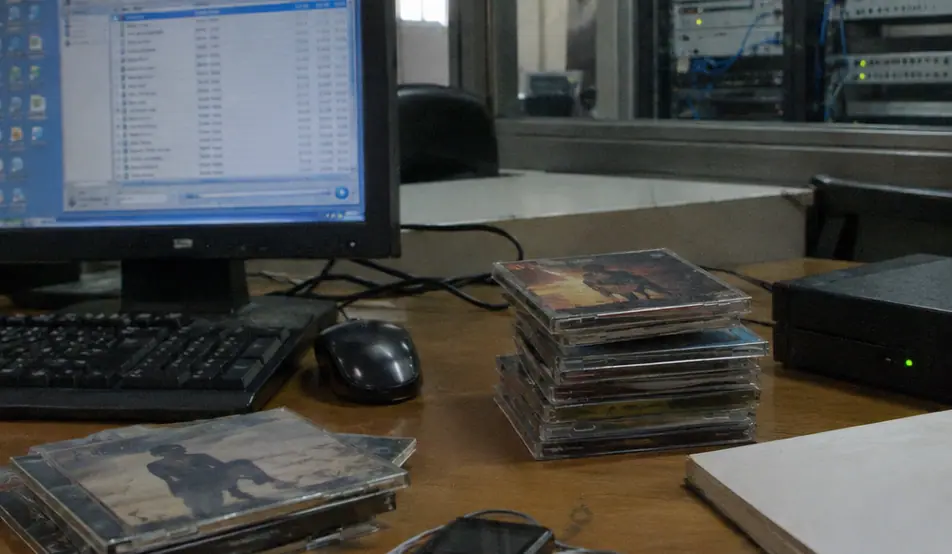
In the Alaba International Market model, an artist typically sold a master outright for a one-off fee. Marketeers then managed replication runs pressed in lots of roughly 1,000 to 5,000 units. The artist could see discs moving across tables and buses without receiving a buyer name, phone number or location. Cash changed hands; audience knowledge stayed downstream.
Caller tunes and ringtones shifted paid digital consumption onto operator decks from around 2005 to 2012. Each download or subscription created a measurable transaction, yet the subscriber record remained inside the operator’s billing system.
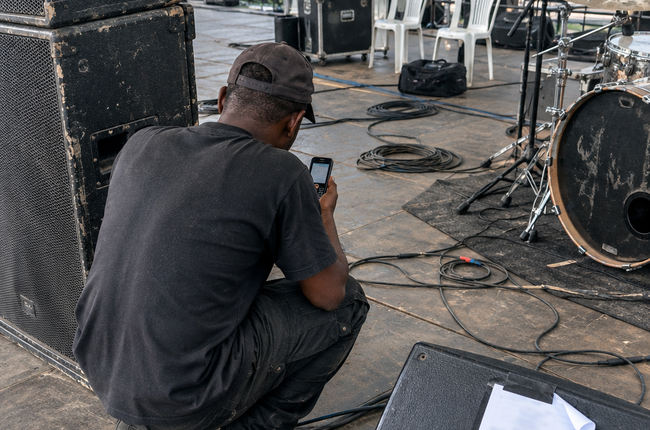
The mp3 download-blog era, which peaked roughly between 2011 and 2017, introduced another durable behaviour. Nigerian listeners learned to keep a file offline, move it between devices and return to it without a connection. Streaming later became the default discovery environment, but that possession habit survived.
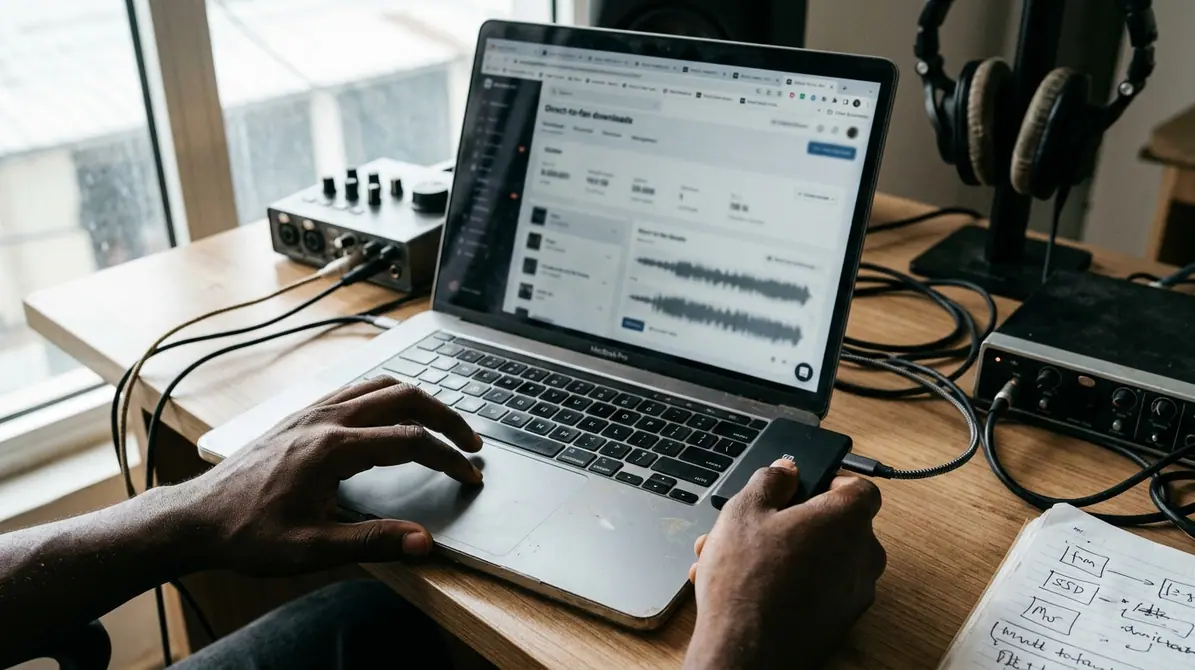
Artist-owned checkouts supported by local gateways became practical from about 2016 onward. That technical shift matters because the artist can now receive payment, deliver the file and retain consented customer details inside one controlled system.
Building a Store Around How Naija Fans Buy
A useful artist store begins with release-week requests. Fans ask for the instrumental. Dancers want a clean acapella. DJs and producers want stems. Collectors want the artwork, credits and extended version that a streaming page compresses into a thumbnail and track list.
Three Rungs, Three Buyers
The catalogue should give each group a clear entry point:
- Casual fan: a high-bitrate mp3 single priced around ₦500–₦1,000.
- Committed listener: an album or deluxe bundle around ₦3,500–₦6,000, with WAV masters, PDF liner notes, lyric sheets or artwork files.
- Working creator: a stem or session pack around ₦20,000–₦50,000, designed for remixers, DJs and dance-edit makers.
File weight shapes the product. A three-to-four-minute track at 320 kbps occupies about 7–9 MB. The same master in 16-bit/44.1 kHz WAV reaches roughly 35–45 MB. Eight to fourteen tracked stems can produce a 250–600 MB zip file, so the stem pack needs its own product page and a visible desktop-download warning.
Delivery rules deserve equal attention. Something like five download attempts per order and links valid for just about 72 hours give buyers room to recover from unstable connections. A re-download window honoured for 90 days, more or less, against the original order email resolves legitimate access problems without leaving permanent public links in circulation.
Bundle Discipline
Keep the first store small: one accessible single, one richer album bundle and one specialist producer pack. Catalogue depth should follow actual demand.
Making Naira and Diaspora Checkouts Work
The checkout determines whether a direct-download plan survives contact with release day. Nigerian buyers need card, bank transfer, USSD and wallet routes because a timed-out card attempt should not end the sale. Transfer and USSD provide a practical second path when the first payment rail fails.
Model the Whole Fee Stack
Certain Nigerian providers price local-card transactions near 1.5% plus a small fixed charge, sometimes waiving that fixed portion below a low threshold and applying a cap. International-card pricing commonly sits near 3.8% plus the fixed charge. On a single priced below ₦1,000, that fixed component can matter more than the percentage.
Then come the less visible costs: storefront subscriptions, bandwidth, foreign-exchange spread and settlement timing. Domestic collections commonly arrive the next business day, while foreign-currency or FX-settled orders have taken five to seven business days. Card chargeback exposure can remain open for as long as 120 days.
A naira-only checkout also creates friction for diaspora fans whose foreign-issued cards may be declined. Dual pricing in naira and a foreign currency should be tested before launch, alongside the exact amount that reaches the artist after conversion.
Rate-window caution: gateway percentages, caps, settlement terms and FX handling change by provider, merchant category and processing volume. Confirm the applicable terms in writing within 30 days of the release.
An idle store still incurs its fixed costs. Build the subscription and hosting decision around the release calendar, especially when six to nine months may pass between drops.
The Fan List Is the Store’s Durable Asset
The file completes the immediate transaction. The buyer record creates the longer relationship.
At checkout, collect only the fields that have a defined use: email, phone number in international format and city, stored beside purchase history and order date. City-level order counts can identify the strongest eight to twelve buyer clusters for tour routing. Previous buyers can receive a presale link seven to ten days before a public announcement. For a solo project, two cover artworks can also be tested against a real purchasing segment rather than an unqualified social-media audience.
Keep Control With the Artist
Fan contacts should live in an artist-owned account with billing in the artist’s name. A manager can hold delegated access. The full list should be exported monthly to an artist-controlled backup so a platform suspension, staffing change or lost phone does not erase the audience.
Consent must remain explicit. Under Nigeria’s data-protection framework in force since 2023, the practical baseline includes an unchecked marketing opt-in, a stated processing purpose and a working unsubscribe route. The Nigeria Data Protection Commission provides the official regulatory context.
A clean buyer list changes negotiations. Labels, publishers, brands and festival bookers can evaluate demand by city, order value and repeat purchase history. The artist presents evidence of a paying community instead of relying on reach screenshots alone.
Downloads and Streams Do Different Jobs
A download produces one higher-value transaction. Domestic store proceeds commonly settle within one to seven days of purchase. Streaming income travels through a distributor and typically arrives 45–90 days after the month in which listening occurred.
Cash Flow Versus Discovery
An album bundle priced at ₦3,500–₦6,000 settles as a single purchase. Reaching the same gross through streaming requires fractional payments accumulated across listeners, territories and a tail that can run 12–24 months beyond release week. That timing can make store revenue useful for funding artwork, rehearsal or the next visual while a campaign remains active.
Streaming holds the advantage in discovery. Algorithmic recommendations, editorial playlists and searchable catalogues reach people who have never heard the artist’s name. Streaming counts also feed chart placement, playlist pitches and music news narratives across the Nigerian industry.
Download totals stay private unless the artist publishes them. Their commercial strength rarely becomes booking leverage until the numbers are translated into a credible buyer list. The store’s ceiling is first contact: a stem pack or numbered artwork bundle can deepen an existing Naija fanbase, while DSP placement finds the unfamiliar listener.
Sequence the Store Before the DSP Release
A month-long store exclusive asks too much of an independent campaign. It delays the streaming moment that supplies chart visibility, playlist consideration and social discovery. A shorter window preserves urgency without draining first-week attention.
A Ten-Day Maximum
- Open a five-to-ten-day store exclusive for material DSPs cannot host well, such as stems, an extended mix or a signed-artwork bundle.
- Release the core single on DSPs while campaign traffic still points toward the store page.
- Keep the checkout staffed and monitored through Sunday night so failed payments and expired links receive prompt attention.
- Track the dance edits, DJ reworks and remix clips that emerge during the following two to six weeks.
A Friday drop at roughly 15:00 WAT catches Lagos and London in the same afternoon, Toronto and Atlanta in mid-morning, and Houston at around 09:00. That shared window gives artists one coherent announcement cycle across home and diaspora markets.
Stem packs usually move in small volumes, sometimes only a handful of orders on a release. Their cultural function exceeds the order count. Producers, dancers and DJs convert separated musical parts into street-party edits and performance material that can return attention to the streaming single.
Put the Store Second and Build It Now
Every independent Nigerian artist should open a direct-download store before the next release. Streaming should remain first in the distribution hierarchy because it carries discovery, public momentum and chart-readable activity. The store sits beneath it as the ownership layer for cash, buyer history and consented contact.
In practice, the useful metric is repeat purchase: the share of buyers from one release who returned for the next drop within a six-to-nine-month span. Report it as a ratio across two consecutive releases rather than forcing it against an invented industry benchmark.
The first build can fit inside a 30-day setup, give or take: one paid bundle, one consented email list and one exportable backup held in the artist’s own account. Recheck gateway terms, link-expiry settings and export health at every release.
When the next Friday drop hits at 15:00 WAT, the artist who owns their checkout isn't just counting streams—they are watching the first names and cities of their most committed fans populate a database they actually control.