In this Article
- Why downloadable EPs have returned to Nigerian release calendars
- How artists package and distribute a download-first release
- Why data costs and offline listening still shape access
- What file downloads mean for charts and artist analytics
- How metadata can limit the damage from unofficial reposts
- Where an independent EP can earn money across its first year
- A six-week rollout for a five-track Lagos EP
Why Are EP Downloads Back on Nigerian Release Calendars?
If streaming supplies the chart positions, playlist signals and recurring royalties, why are Nigerian artists still shipping EPs as downloadable files?
The answer sits inside the release caption. Across recent independent Naija rollout weeks, downloadable bundles repeatedly appeared beside DSP smart links, pre-save pages and short-form video clips. These files did not replace streaming. They gave the same release a second route into phones, fan groups and music blogs.
I first read the pattern as nostalgia for the blog-download decade. The link sets changed that reading. Three artefacts mattered in each rollout: the DSP smart link, the artist-hosted download URL and the time of the first aggregator-blog repost relative to the official post. Download-plus-DSP packaging appeared most clearly around self-released five- to seven-track projects.
This is a commentary on a visible practice among independent, self-released and mid-tier artists working without major-label marketing spend. It does not describe every Nigerian release.
Inside a Download-First EP Package
The Folder Is Part of the Campaign
A functional package begins with one landing link. Behind it sits a compressed folder containing the individual tracks, a 3000x3000 cover image and a plain-text credits file. That text file should spell out the producer, mix and mastering engineer, featured artists and ISRC for each recording. Blog uploaders often copy the material they receive, including its errors.
File weight becomes the next decision. A five-track EP encoded at 128 kbps runs roughly 18–25 MB when zipped, with each track around 3.5–5 MB. A 320 kbps edition can pass 50 MB because each track weighs roughly 9–12 MB. Smart camps prepare both: a light bundle for mobile access and a higher-quality set for listeners with cheaper bandwidth.
The Quiet Hours Before Release
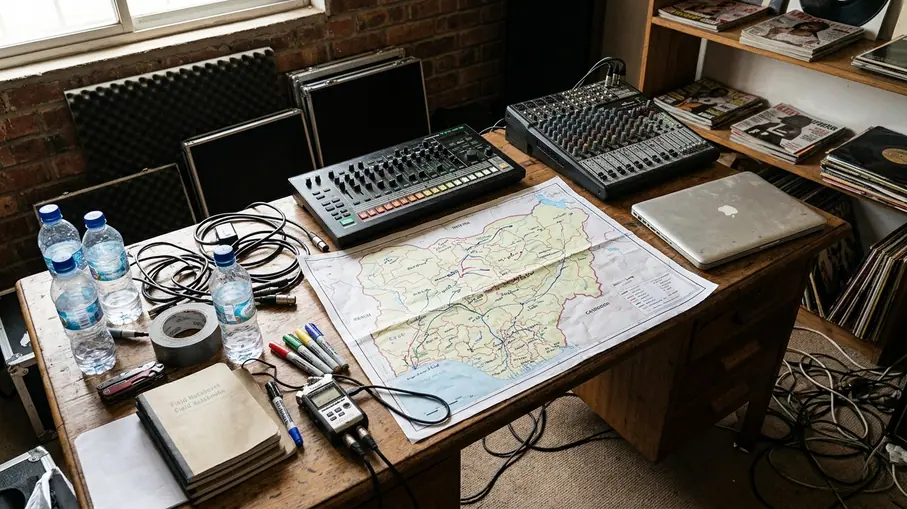
Telegram channel operators, WhatsApp broadcast lists and fan-group administrators commonly receive promo files 24–72 hours before the public post. The message carries an exact embargo hour, approved artwork, correct feature spellings and the official pre-save link.
Nigerian download blogs form another distribution tier. Supplying them directly gives the artist’s camp a chance to standardise filenames, credits and artwork before copied versions begin moving across the web.
Data Bundles Keep Local Files Useful
The access case rests on replay arithmetic. A four-minute track streamed at 128 kbps uses roughly 3.5–4 MB each time. Twenty plays consume about 70–80 MB. A 4–5 MB download uses data once, then plays indefinitely from local storage.

Offline DSP caching offers convenience, yet it usually sits behind a paid tier and commonly requires the app to reconnect within a 30-day verification window. A permanent MP3 remains available when the subscription lapses. It can also travel through Bluetooth, SHAREit-style transfers, memory cards and roadside phone-loading stalls far beyond Lagos and Abuja.
The Nigerian Communications Commission industry statistics placed internet subscriptions within a broad 130–160 million band across monthly filings in 2024 and 2025. That range supplies national context rather than a precise measure of music access.
Where the Argument Ends
The replay-cost logic applies most strongly to domestic listeners buying daily or weekly data bundles. Artists driven by overseas editorial playlists and unmetered home broadband face a different access problem.
Downloads Create a Blind Spot in Charts and Dashboards
A listener can replay a downloaded EP all week without generating one DSP play event. The file manager reports nothing to chart bodies, distributors or the artist dashboard.
That silence costs more than chart position. Artists lose skip rates, save rates, repeat-listening patterns, city-level heat maps and the behavioural signals that can influence algorithmic or editorial playlist consideration. A popular file may be culturally loud and analytically invisible.
Timing sharpens the problem. Standard chart weeks run from Friday at 00:00 to Thursday at 23:59 local time. Delaying DSP delivery by three to five days can split attention across two counting periods. A simultaneous release keeps the download’s access value while allowing streaming activity to gather in the same opening window.
Useful Proxies, Limited Answers
A landing page can recover evidence of intent through campaign-tagged short links, separate links for each channel and a single phone-or-email field. Placing the streaming call to action above the download button also gives listeners a measured option first. These tools count clicks and contacts; they cannot reveal how many times the transferred file played.
Metadata Turns Leak Control into a Brand Decision
Unofficial reposts will appear. The practical question is which copy carries the artist’s identity when it begins circulating.
Before release, the camp can write the ISRC, producer and engineer credits, exact feature spelling, release title and year into each file’s ID3 fields. Embedding the 3000x3000 artwork helps preserve the visual identity inside music players and subsequent uploads. The official bundle then becomes the clean reference copy for blogs and fan administrators.
Early promo copies require a different build. A low-level, recipient-specific audio tag can repeat every 45–60 seconds, paired with a clearly stated embargo five to seven days before release. If the file escapes, the camp has a traceable source while the public master remains untouched.
The counter-risk arrives on drop day. A clean, unwatermarked master removes friction for mass re-uploading. Content-ID disputes on video platforms can also become harder to explain once the artist has deliberately released the same recording as a free file. Metadata improves attribution; it cannot enforce custody.
Where an EP Earns Across Its First Twelve Months
Per-stream income often forms the smallest line in an independent Nigerian EP’s first-year earning picture. The release can still create value through show fees, booking leverage, merchandise, physical bundles, brand conversations and sync opportunities.
Each path demands evidence. Promoters want proof that listeners respond. Potential brand partners want a legible audience. Music supervisors need a discoverable catalogue with reliable ownership and production credits. A download campaign contributes when its landing page records where interest came from and gives the artist permission to contact that audience again.
A phone number or email captured at the download gate belongs to the artist’s operating list. Platform follower counts remain inside the platform. The useful evidence for booking and brand conversations usually comes from the first eight to twelve weeks, while the revenue picture deserves a full 12-month reading.
Costs continue after release week: monthly landing-page hosting and bandwidth, two maintained file mirrors, bulk SMS units with a registered sender ID and roughly 6–10 hours of manual outreach to blogs and channel administrators. Download-first only makes financial sense when the list and reach evidence feed later activity.
A Six-Week Rollout for One Five-Track Lagos EP
Take a specific case: an unsigned Lagos artist has five finished tracks, one guest feature and no campaign budget beyond phone data and a small design fee. Drop day falls at the end of week four. The streaming release and free bundle will go live together.
- Week 1, days 1–7: Finalise every master. Obtain and embed the ISRCs through the distributor, then check the producer, engineer and guest spelling inside each file. Export a 128 kbps bundle under 25 MB and a separate 320 kbps set. Register all five tracks with the distributor for delivery on drop day.
- Week 2, days 8–14: Build one mobile-friendly landing page with a single capture field, choosing either phone number or email. Upload both bundles to two file mirrors so one broken host cannot stop the release. Assemble a press pack containing the 3000x3000 cover, full credits and a 120–150 word artist biography.
- Week 3, days 15–21: Send watermarked promo copies to selected blog editors, Telegram channel operators and fan-group administrators. Put the embargo date and hour in the same message. Include the approved feature spelling, artwork and pre-save link so nobody has to reconstruct the release details.
- Week 4, days 22–28: Publish the DSP smart link and download page at the same hour. Place the streaming option first in every caption, followed by the light bundle and then the high-quality edition. Give each blog, broadcast list and social channel its own tagged link.
- Week 5, days 29–35: Send one message to the captured list. Lead with a track-by-track note explaining the guest appearance and production choices. Release one visualiser for the song receiving the strongest response, then direct viewers back to the DSP link.
- Week 6, days 36–42: Compare landing-page clicks, completed captures and channel-tag activity against DSP listener counts. Keep the best-performing outreach route, archive broken mirrors and record which track drew the most measured streaming interest.
On day 42, the artist exports the captured contacts, labels them “Five-Track EP, Lagos, Week Six,” and sends one booking-focused message containing the visualiser, DSP link and a concise performance enquiry. That single file becomes the working audience list for the EP’s next show.