
Takedowns Have Relocated Naija Download Traffic, Not Reduced It
Each enforcement wave has pushed Nigerian music downloads toward addresses that are more private, less searchable and harder to audit. During the indexed-blog peak of roughly 2014–2019, an Afrobeats release usually acquired a public URL, an artist archive and a lyrics page. By 2021–2025, the same file increasingly surfaced as a forwarded attachment, a channel entry or a shared-folder link with no crawlable index.
The decisive measurement is where the file appears first. Nigerian singles and albums are overwhelmingly timed for Friday at 00:00 WAT, so the critical interval falls within the next four to nine hours. That is when unofficial distribution races to occupy the demand created by music news, social posts and release-night conversation.
This shift matters to two audiences. Fans need to know what they receive when they open a forwarded track. Rights holders need to decide whether another domain notice will protect a release whose copies already circulate inside closed or semi-closed systems.
The Address Shift: Removing a public download page can erase its searchable index while leaving mirrored files intact. Enforcement changes discovery first; deletion of every copy rarely follows.
What the Naija Download Blog Era Built Before It Broke
The classic download blog functioned as a fast, improvised catalogue. Within two to six hours of a Friday drop, operators could upload a 128 kbps or 192 kbps MP3, publish an artist-tag page, copy the lyrics into a companion post and place a few advertising layers between the reader and the file.
That structure made the sites culturally useful and legally exposed. Search engines indexed the release page. A rights holder could identify the domain, hosting provider and advertising network, then direct notices toward several parts of the operation. Public visibility supplied the audience while creating a clear enforcement map.
A Catalogue Made of Mirrors
Routine link-rot checks on previously referenced pages reveal the recurring pattern. A domain often becomes dead or parked within one to three months of an enforcement wave; a near-identical layout may reappear under another top-level domain two to eight weeks later. Page furniture, artist categories and ad chains survive the move because the underlying publishing template is easy to reproduce.
More important, the MP3 has usually been copied before the page disappears. Takedown removes a convenient public index, not the memory cards, handset folders, channel uploads and locker mirrors created during the release window. The old blog therefore built more than a piracy route. It trained audiences to expect every new single, album or EP as an immediately downloadable object.
The New Addresses Are Chats, Channel Archives and Locker Links
The current distribution system has four distinct surfaces, each with different visibility and persistence.
- Group chats: An album of something like 10 to 16 tracks arrives as a sequence of attachments, ready to forward into another conversation.
- Broadcast channels: Pinned catalogue indexes turn channel histories into permanently searchable archives for members.
- Cloud folders: A short link opens a publicly readable folder whose contents remain invisible to ordinary search crawling.
- Offline transfer: Phone-loading kiosks, memory cards, Bluetooth and local file-share apps move tracks without a web request at the point of exchange.
These routes overlap. A channel administrator can retrieve an album from a cloud folder, publish each track separately, then watch members carry those attachments into private WhatsApp groups. A kiosk can later load the same folder onto several phones in a low-data neighbourhood. No central page coordinates the chain.
What Can Be Observed
This account uses only open surfaces: links posted in public replies, open channel directories and the descriptions channels publish about themselves. It does not enter closed Naija groups under a disguised identity. That boundary supports a defensible account of where files have moved, while preventing any reliable claim about how many files sit inside those groups.
The enforcement friction follows directly. A notice against an indexed page can reach a domain, host and ad network. A channel copy may return within minutes or a few hours, and removal can depend on a member choosing to report it.
A Forwarded MP3 Trades Away Bitrate, Credits and Device Safety
The easiest cost to hear begins with compression. A licensed download or distributor master typically arrives at 256–320 kbps. A blog rip may reduce it to 128 kbps, and another chat re-encoding can push the copy toward 96 kbps. Missing frequencies cannot be reconstructed later, however expensive the listener’s headphones become.
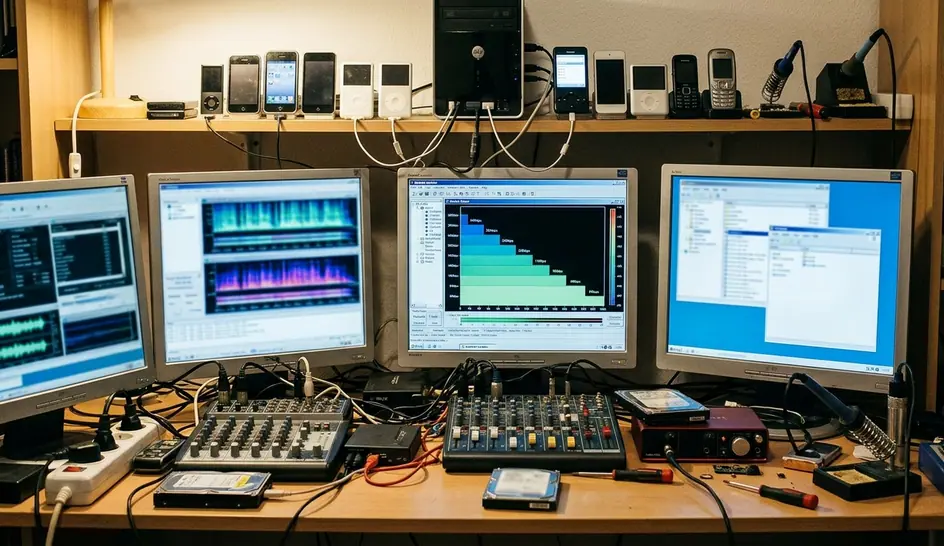
Afrobeats mixes expose this damage quickly. Percussion loses separation, vocal edges become brittle and bass information smears into the lower midrange. The Friday-drop ladder can turn a 320 kbps distributor file into a 128 kbps blog rip within four to nine hours, followed by a second-forward attachment near 96 kbps.
The File Name Is Weak Evidence
Metadata often deteriorates alongside the audio. Forwarded folders may omit artwork, scramble the track order, attach a featured artist to the wrong song or present a DJ edit as the official version. Sped-up cuts and remixes can circulate under the original title, leaving fans with a library that no longer reflects the released album.
Package inspection matters before playback. An “album zip” containing an .apk or .exe file introduces executable software that music does not require. A locker asking for a phone number before unlocking the download may be collecting contact details. Shortener chains that continue through three or more hops and finish at a subscription prompt signal a billing trap rather than a file source.
Three Checks Before Opening
- Confirm that the archive contains audio and artwork rather than executable installers.
- Compare the visible track order and credited features with the artist’s release-week post.
- Leave when a short link produces another unlisted shortener or requests a phone number.
Legal Routes Can Deliver a File or a Licensed Offline Copy
A purchased download and an offline cache create different forms of access. The purchased file remains available after the transaction and can usually be moved into a personal music library. A subscription app stores an encrypted offline copy that may expire when the subscription ends or the account loses authorization.
Fans seeking a permanent file should begin with artist-controlled routes: the official link in a verified bio, a label microsite, a pre-order page or a merch bundle carrying a download code. These destinations preserve the release’s intended tracklist, artwork and credits while connecting payment or licensed access to the rights chain.
Africa-focused services may instead offer downloads or offline listening through data-priced tiers billed in naira. In the early 2020s, bundles in the ₦100–₦1,000 range, give or take, and practical offline allowances changed Nigerian listening behaviour more visibly than any single takedown wave in the preceding decade. Price, local billing and data control solve the immediate access problem that piracy routes exploit.
The One-Minute Link Test
- Match the tracklist and release date to the artist’s own post from release week.
- Compare the destination domain with the domain published by the label’s verified account.
- Abandon the route if its final hop passes through an unlisted shortener.
This test assumes that a living rights chain exists. Some Nigerian releases from the 1990s and 2000s have no canonical link because the original label folded or the masters never reached a digital distributor. In that narrow catalogue gap, a public request for a licensed reissue creates a clearer market signal than another anonymous upload.
Rights Holders Keep Chasing Pages While Albums Move Through Channels
The central budget question is simple: where does an enforcement hour return the most? Conventional takedown workflows assume an indexed page, an identifiable host and a commercial relationship with an advertising network. Closed-channel distribution removes those handles.
The timing mismatch compounds the problem. A web notice can take anywhere from a day to two weeks to produce delisting. During that interval, a channel administrator can restore the same album in minutes, pin it to an archive and distribute a replacement link. Repeating the notice may suppress search visibility, but it does little to interrupt circulation among members who already know the channel address.
Nigeria’s Copyright Act was overhauled in 2022 and is administered by the Nigerian Copyright Commission. Enforcement capacity tends to concentrate on visible commercial infringers, including duplication plants and market vendors. Closed-channel re-uploaders present a different operational target because identity, hosting and monetization may sit across separate systems.
Publish the Destination Before the Leak
Release operations can reduce ambiguity by publishing one canonical download or offline-listening link in the artist bio and pinning it before the video premiere. The sequence matters. Fans searching during the first release-night hours should encounter the authorized destination before forwarded copies become the easiest option.
Fan guidance also needs to travel in the formats used inside these networks: compact release cards, clear tracklists and direct links suitable for reposting into chats. A long legal warning cannot compete with a one-tap attachment. A verified, data-conscious route can.
Open the Artist’s Own Link Before Any Group Chat
The next release offers the cleanest point to change the habit. Start at the artist’s verified profile, follow the official destination and choose either the licensed download or the platform’s offline-save control. Before writing the file to the device, match two items against the artist’s own post: tracklist and release date.
If an older Naija album has no licensed file, say so publicly to the label or distributor instead of filling the gap with a re-upload. That request identifies demand for the catalogue and keeps the missing release visible.
For the next Friday drop, open the artist’s verified profile first and save the release from the link pinned there.