

The Vanishing Context of the Digital Purchase
Afrobeats commands unprecedented global and archival attention. The sonic architecture of Lagos and Accra now dictates pop rhythms worldwide, prompting institutional recognition that alters how contemporary African popular music is cataloged. The Recording Academy introduced the Best African Music Performance category in February 2024. This milestone marks a definitive shift in how the industry preserves the genre's output. Yet, the actual digital artifacts fans purchase are shrinking.
Establishing the scope of the archival gap requires focusing exclusively on paid download releases rather than streaming platform interfaces. The digital download was supposed to replicate the physical album experience, complete with liner notes and artwork. A major digital storefront retired its proprietary interactive album format years ago. Since that infrastructure vanished, most paid download stores have shipped nothing but audio files and a single cover thumbnail.
A Nigerian fan who pays for a full-length project in 2025 usually receives less context than a cassette buyer received in 1985. The music travels further, but the metadata stays behind, leaving a void where the sleeve used to be.
Reconstructing the Groove from Paper Archives
Physical archives from the vinyl and cassette eras remain vital for reconstructing session personnel for contemporary retrospectives. Cassette and CD inserts from the 1980s and 1990s contained four to eight panels of printed lyrics and studio names. These folded pieces of paper served a critical function for highlife, juju, Afrobeat, and early Afropop releases.
They told a listener exactly who played the talking drum, who arranged the horn section, and which specific studio hosted the late-night sessions. The typography might have been cramped, and the ink sometimes smudged, but the information was permanent. Consulting physical archives from the vinyl and cassette eras confirms that printed sleeves allow researchers and reissue labels to reconstruct session personnel from a 30 to 40 year archival period. We know the exact lineup of Fela Kuti's Afrika 70 or King Sunny Adé's African Beats because someone typed the names onto a physical sleeve.
A 2016 mixtape uploaded as loose MP3s loses its production credits within one hard-drive failure. The paper trail survives because it was bundled with the music itself, creating an unbreakable link between the audio and its creators.
Structuring the Modern Liner Notes
Categorizing Afrobeats digital booklet components into linguistic transcriptions, ISRC-level metadata, and session personnel documentation requires a strict layout. High-resolution cover art exported at a minimum of 3000 by 3000 pixels at 300 DPI anchors the document. The pages following it must carry exact transcriptions of Yoruba, Igbo, Hausa, and Nigerian Pidgin lyrics alongside English lines.
Keeping these languages in their original spelling respects the linguistic architecture of the songs. A short gloss for idioms and proverbs helps diaspora and international listeners follow the meaning without flattening the cultural specificity. Full production credits per track demand dedicated space. The layout must list specific contributors:
- Producer and co-producer
- Songwriters and vocal arrangers
- Recording and mixing engineers
- Session musicians
The inclusion of production credits within a digital booklet serves strictly as listener documentation and cannot substitute for formal rights registration or publishing filings. It exists to inform the audience, providing a map of the collaborative effort required to build a modern Afrobeats track.
Linguistic Transcription Standards
Documenting lyrics in their original syntax preserves the rhythmic phrasing of the vocal performance. Standardizing the spelling of Nigerian Pidgin or Yoruba phrases within the booklet ensures that international listeners engage with the text exactly as the vocalist intended, rather than relying on inaccurate third-party lyric sites.
Evaluating the Delivery Mechanisms
Restricting the digital booklet archival argument exclusively to paid download releases rather than streaming platform interfaces clarifies the format choice. Streaming credits panels exist inside apps, but the display remains platform-controlled and fields are limited. Lyrics and essays rarely fit within these constrained UI elements, and fans own nothing after a subscription lapses. The platform dictates what information is visible, often burying session musicians beneath top-level artist names.
Album microsites offer rich, beautiful rollout experiences. We rejected relying solely on album microsites because lapsed domain registrations frequently erase them after release. A lapsed domain renders the site useless offline, turning a meticulously designed digital experience into a dead link.
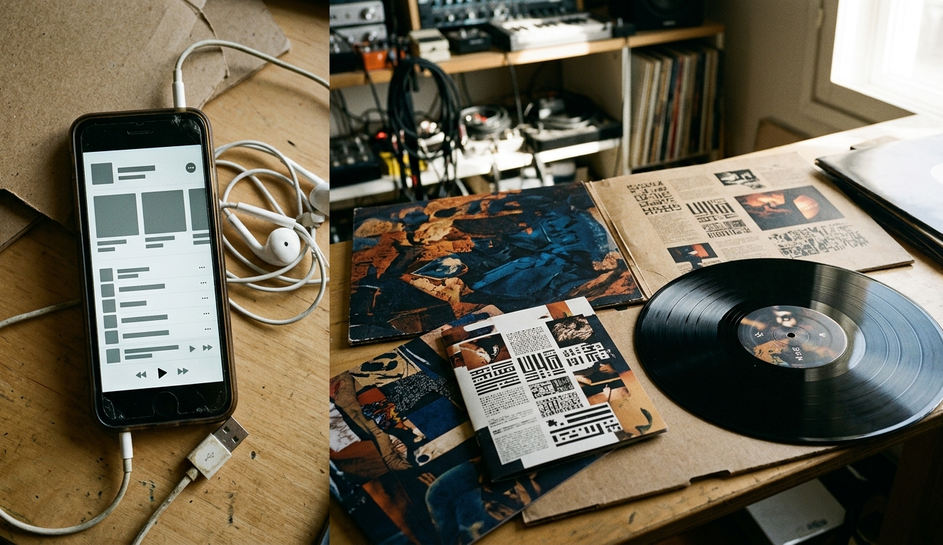
Bundled PDFs remain permanently accessible. Keeping PDF file sizes under 15MB for bundled downloads ensures mobile accessibility. The file travels with the audio, independent of server uptime or subscription status. It is a self-contained archive that requires no internet connection to function once downloaded.
The Commercial Logic of the Bundled Download
Framing the paid download as a premium collector's item differentiates it from free-to-access streaming audio. When the same audio is free-to-stream, the paid download has to sell ownership of an object with contents. The transaction must offer something tangible—even if that tangibility is digital.
Direct-to-fan storefronts processing album downloads with bundled PDFs during the initial release window see a shift in audience behavior. Booklets convert casual listeners into collectors. Collectors subsequently purchase deluxe editions, vinyl pressings, and tour tickets.
The digital booklet provides the value that justifies the transaction. It transforms a folder of MP3s into a curated archival package.
Fans are willing to pay for proximity to the artist's process, and a well-designed booklet offers a window into the studio. It signals that the release is a major artistic statement rather than a disposable playlist addition.
Executing the Layout on a Rollout Schedule
Capturing credits via a shared studio document during the active recording phase prevents scrambling after mastering. The energy of a recording session often obscures the administrative necessity of writing down who contributed what. A shared sheet in the studio records who played what, spelled the way each person wants their name spelled.
Design the layout once and reuse it forever. One layout template, two typefaces, and embedded fonts streamline the process. Exporting the final layout as a web-optimized PDF compressed to between 5MB and 12MB keeps the file honest about size. A booklet a fan on mobile data cannot download simply fails to exist.
The technical execution must prioritize accessibility over excessive graphic fidelity. Heavy files create friction, and friction prevents the fan from engaging with the liner notes. By standardizing the design process, independent labels can ship comprehensive booklets without inflating their rollout budgets or delaying the release schedule.
The Archival Drive in Surulere
Designing the digital package to ensure the PDF sits in the exact same directory as the audio files guarantees long-term archival retrieval.
A student in Surulere plugs a ten-year-old external drive into a borrowed laptop. She opens a folder from an album she bought years earlier and finds the PDF sitting beside the audio files. Scrolling past the lyrics, she locates the percussionist's full name on track seven and reads the artist's paragraph about the funeral that inspired the closing song. On the final page, she finds the photographer credits for a cover shot taken at dawn on the mainland. The record still plays, and the booklet is the reason she knows exactly who made it.