Why Great Naija Reviews Start at the Track Level, Not the Vibe
The strongest Afrobeats reviews are built from disciplined track-by-track listening, not from a single emotional verdict formed on the first play. A pervasive habit in modern music criticism relies on capturing a general "vibe" and stretching it across a thousand words. We settled on the track-by-track thesis after comparing two review drafts of the same 15-track LP side by side: one written from a single first-play impression, the other from disciplined per-track analysis. The difference in critical depth was undeniable.
First-listen bias tends to inflate the two to four pre-release singles most artists push in the weeks before an album drop, while burying deep cuts that carry no marketing. When you review the vibe, you are often just reviewing the promotional rollout. To counter this, four fixed lenses drive the whole framework: sequencing, production, lyric themes, and replay value. This repeatable method allows any listener to dismantle and evaluate a full LP or EP with precision.
Set Up Your First Full Listen (The Uninterrupted Pass)
The uninterrupted first pass exists because it is too easy to form a verdict by track three and spend the rest of the album confirming it. The rule is strict: play the album in its intended order, start to finish, with notifications off and absolutely no skipping.
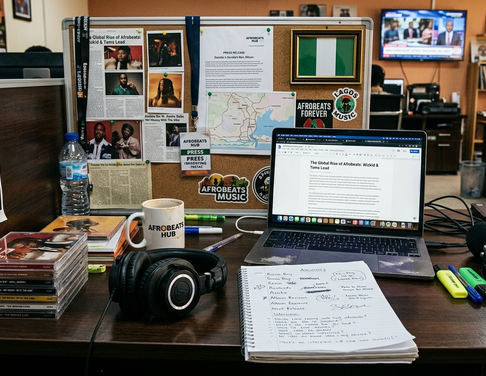
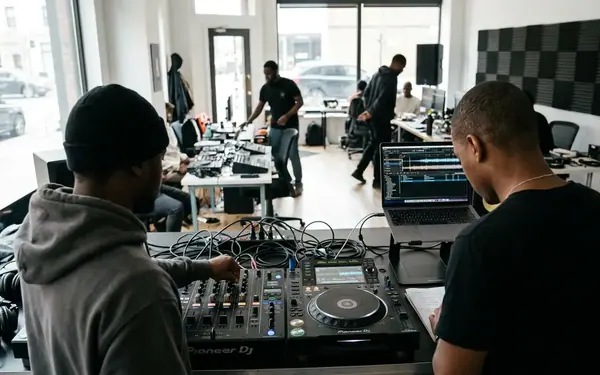
One clean pass on a standard Afrobeats LP runs roughly 40-55 minutes. EPs land closer to 18-25 minutes across five to seven tracks. During this initial window, use quality playback equipment. Headphones or studio monitors reveal the low-end and layered percussion that decide these records. A phone speaker collapses the log-drum and 808 balance you most need to hear, so a phone-only first pass isn't usable evidence.
Expert Tip: Keep your per-track first-pass log minimal. Capture four fields only: energy level, hook strength, one standout moment, and one flag to revisit. Note your gut reactions, but withhold final judgment.
Read the Sequencing: How the Album Is Built
We treat the tracklist as the artist's argument, so sequencing gets read before production is judged. Analyze the track order as a deliberate artistic choice rather than a random collection of songs. Name the opener's job. Is it a bold statement track or a gradual mood-setter? Then, find the closer's payoff.
Mark the album's energy peak, its lowest-tempo breather, and any reset point by their track number and timestamp so the arc is auditable. A common frontloading pattern places pre-release singles in the first four or five slots, leaving tracks after the halfway mark to define the deep-cut experience. This sequencing analysis assumes you play the intended order; shuffle playback or a streaming platform's algorithmic reorder destroys the very arc you are evaluating.
Judge the Production: Beats, Mix, and Sonic Identity
Production judgment starts by naming what you actually hear rather than reaching for generic adjectives like "clean." Separate the sonic families first. Amapiano-leaning cuts demand you name the log-drum and shaker balance, while an alte record is judged on negative space and synth texture — the same 'clean production' verdict fits neither.
Assess the mix by checking vocal clarity and low-end balance. Every production claim ties to a timestamp. Writing that "the bassline swallows the vocal from 1:12-1:28" provides concrete proof of a mixing flaw, whereas a whole-album adjective offers nothing. Evaluate feature placement per guest verse to see if the artist's tone sits naturally in the mix or overrides the beat's pocket.
Caution: Naming producers only works when the tracklist or official credits confirm them. On quietly released projects with incomplete metadata, describe the sound and leave the name out rather than guess.
Decode Lyrics and Themes in Context
Themes get tracked as they recur, not summarized once. Trace concepts like love, hustle, faith, street life, and diaspora identity from track to track to see whether the album actually develops an idea. Run each recurring theme across the tracklist and note which tracks advance it versus those that merely repeat it.
Evaluate storytelling and wordplay separately from melody, because strong hooks frequently mask thin writing. A magnetic Pidgin hook can score high on melody yet fail the lyric lens once the verses are transcribed from a credited source and read for actual content. Interpret Pidgin, Yoruba, Igbo, Hausa, and slang phrasing without flattening their cultural meaning. Before quoting, confirm the line against official lyric sources. Mishearing dialect phrasing is common, and a printed misquote damages the review's credibility.
Measure Replay Value and Assign Fair Scores
Scoring is deliberately delayed because replay value only surfaces across repeat listens, never on day one. Return to the album over several days. Space repeat listens across four to seven days before locking any score, so growers have time to reveal themselves. This separation isolates true filler from complex arrangements that reward patience.
Build a simple per-track rubric across the four lenses, then weight the final verdict toward sequencing and replay value over any single standout track. Editorial partnerships maintained since the platform's launch suggest field data on mixtapes & playlists heavily favors tracks that reveal new layers on the fifth listen.
Four-Lens Track-by-Track Scoring Grid
| Lens | What you check | Anchor your rating to | Common trap |
|---|---|---|---|
| Sequencing | Opener's job, closer's payoff, energy arc, interlude function | Track numbers where the album peaks, breathes, resets | Judging tracks in isolation |
| Production | Low-end balance, percussion clarity, synth textures, feature mixing | Specific timestamps (e.g., 1:12-1:28) | Using generic terms like "clean" |
| Lyrics | Thematic development, wordplay, cultural context, storytelling | Credited transcriptions and recurring motifs | Letting a strong melody mask weak writing |
| Replay Value | Longevity, hidden layers, skip-worthy filler vs. growers | Repeat listens spaced across 4-7 days | Scoring based on day-one hype |
Common Mistakes That Ruin Naija Album Reviews
Certain failure patterns consistently sink otherwise sharp reviews. Reviewing off the singles alone tops the list. When critics ignore sequencing and treat the album as a loose collection of songs, they miss the architecture of the project entirely.
Confusing chart performance or streaming numbers with artistic quality is another major misstep. Streaming and chart position measure marketing reach and fan mobilization, not craft. The two diverge most on debut and hype-cycle releases. A hype-cycle debut that dominates release-week streaming still ranks low when its tracks 9-14 collapse under a track-by-track pass. Chart data belongs in a review as industry context, but never as a stand-in for the quality judgment itself. Replace vague adjectives with concrete anchors: a timestamp, a producer credit, or a specific lyric.
Write and Publish Your First Track-by-Track Review
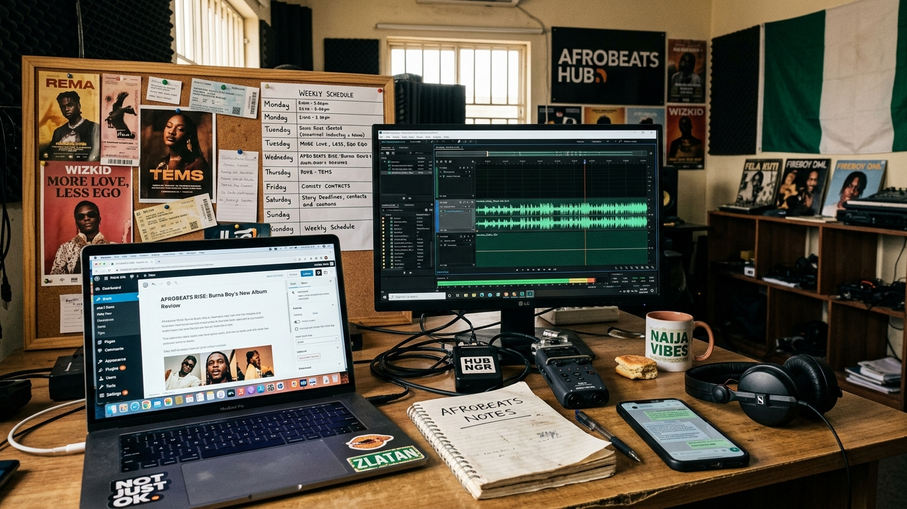
Main Point: One full review workflow spans roughly five to seven days from the first listen to publish. This ensures the music has time to breathe and your analysis moves past initial biases.
Pick one single recent Nigerian album released this week and run all four lenses end to end. Execute the uninterrupted pass, map the sequencing, log your production and lyric notes, and conduct your multi-day replay sessions. Draft a short intro, compile your per-track notes, and ship the verdict as a weighted score with a one-line reason attached to each of the four lenses.