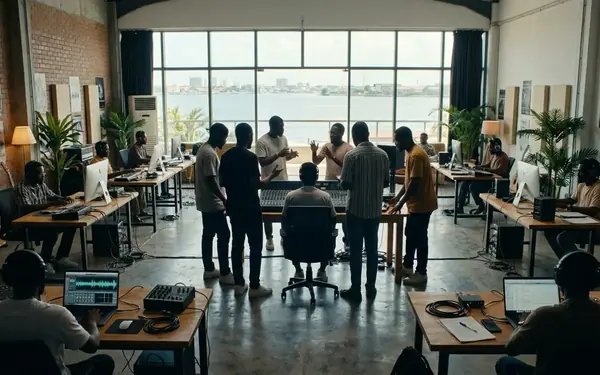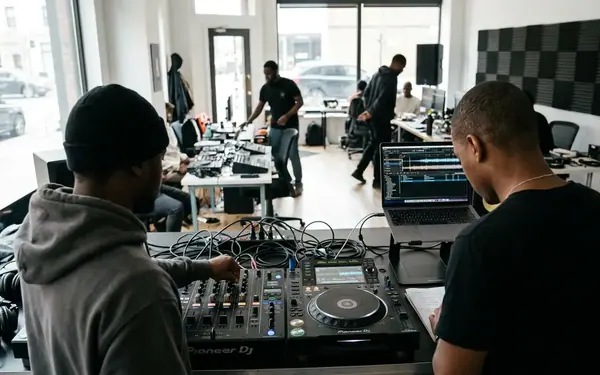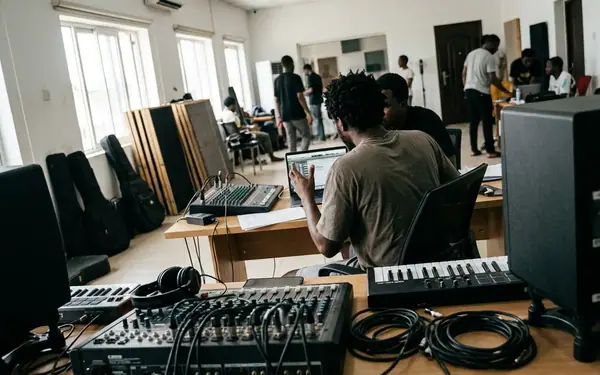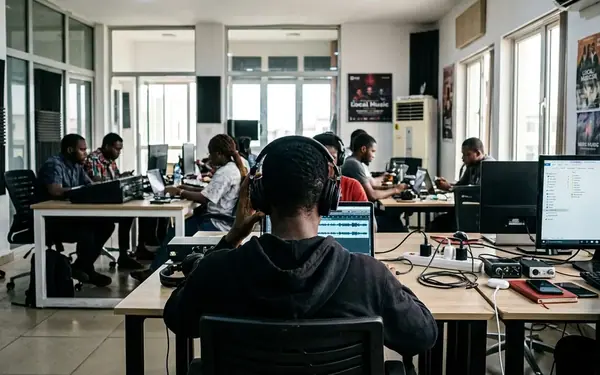
Nigerian music videos now carry a strategic burden that earlier Afrobeats clips rarely had to carry: they must translate sound, fashion, dance, city texture, and cultural authority for audiences who may encounter the artist first through a screen rather than a radio rotation or club set.
That shift explains why the visual economy around Afrobeats has become as important as playlist placement. A song can travel through TikTok fragments, streaming thumbnails, festival screens, and short-form edits before a listener learns the hook. The video gives that fragmented attention a world to enter.
The Evolution of Afrobeats Visuals
From broadcast performance to cinematic packaging
The first principle is simple: the export format changed, so the image had to change with it. Early 2000s MTV Base Africa aesthetics favored direct performance, visible party energy, compressed lighting setups, and a documentary closeness to the artist. Those videos made sense inside a broadcast environment where speed, recognition, and rotation mattered more than cinematic density.
Producers initially considered preserving that raw performance language because it kept budgets low and protected the street-level immediacy that built Naija pop. The approach had force. It gave viewers sweat, movement, and proximity.
Yet archival footage review and aesthetic transition planning around 2018 to 2021 pushed many teams toward a different conclusion. The global platform environment rewarded cleaner masters, sharper framing, and stronger art direction. The practical transition from standard definition 480p broadcast masters to 4K digital cinema packages for global distribution changed not only resolution but also behavior on set: lighting had to hold up, skin texture needed careful treatment, wardrobe choices became more exacting, and continuity errors became less forgivable.
MTV Base memory versus streaming expectation
The older broadcast clip worked like a club flyer in motion. It announced the artist, identified the dance, showed the crew, and carried the beat. Contemporary streaming standards ask for more layered meaning. A single frame must sell a cosmopolitan Lagos rooftop, a traditional textile reference, a luxury aspiration, and a dance challenge-ready gesture.
This does not mean the early language disappeared. It survives in crowd staging, handheld push-ins, performance circles, and the refusal to let the camera become too polite. The stronger contemporary videos usually keep one foot in that broadcast grammar while adding controlled production design.
Main Point: Afrobeats visuals did not become global by abandoning local energy. They became global by formatting that energy for higher-resolution, platform-native discovery.
Digital distribution as pressure system
Digital distribution created a quality audit that no single broadcaster controls. A video must survive phone viewing, smart television playback, festival LED screens, editorial embeds, and compressed social reposts. That chain punishes muddy color, unstable masters, and weak opening frames.
For Nigerian artists, higher visual fidelity became a discovery tool, not cosmetic excess. The thumbnail competes before the chorus lands. The first ten seconds carry the burden once handled by radio familiarity. In that environment, cinematic storytelling functions as audience segmentation: diaspora viewers may read homecoming codes, pan-African audiences may read shared fashion language, and new listeners may read confidence before they decode lyrics.
Cinematic Techniques and Cultural Export
Color as cultural infrastructure
Color grading now does more than polish footage. It protects cultural information. Cinematographers developed custom Look-Up Tables, or LUTs, to enhance melanin-rich skin tones while allowing traditional textiles and indigenous wardrobe elements to stand apart from city backgrounds.
The technique matters because Afrobeats videos often place saturated fabric, metallic jewelry, warm skin, painted walls, night lighting, and LED color in the same frame. A generic grade can flatten that range. A careful grade lets the viewer see texture: aso-oke weave, coral beads, reflective sunglasses, braided hair, dust on a street curb after rain.
The effectiveness of custom color grading LUTs varies significantly depending on whether the shoot utilizes natural coastal sunlight or controlled studio RGB lighting. That constraint keeps the process technical rather than mystical. A coastal exterior may push highlights and humidity into the image; a studio setup lets the cinematographer tune the palette with stricter control.
Movement, drones, and Lagos kinetics
Afrobeats is rhythmic architecture. The camera has to understand that.
Dynamic camera movement gives the body its authority inside the frame. Push-ins can catch a shoulder roll at the right beat. Circular tracking can turn a street dance formation into a social map. Low-angle moves can convert a simple performance take into a declaration of arrival.
Drone cinematography adds scale, especially over Lagos, where dense traffic, bridges, shoreline edges, and vertical construction already behave like moving production design. Heavy-lift drones equipped with prime lenses allow aerial shots over dense urban traffic without reducing the city to a postcard. Still, high-budget drone cinematography can fail to resonate when it disconnects from the kinetic, ground-level dance choreography central to Afrobeats culture. The aerial image must return to the body, or it becomes tourism.
Motifs inside modern space
The most persuasive cultural export strategy does not freeze tradition in a museum pose. It stages indigenous motifs inside modern, cosmopolitan environments. Masquerades can appear beside contemporary styling. Traditional choreography can interrupt a luxury interior. A local market color palette can guide the wardrobe for a nightclub scene.
Pre-production location scouting often spans roughly two to three weeks when teams need to secure indigenous cultural motifs such as masquerade staging areas. That time investment shows up in the frame. It separates decoration from placement. The viewer senses when a cultural reference has been negotiated, rehearsed, and spatially understood.
Workshop experience shows that audiences respond more strongly when the cultural motif changes the blocking, not just the background. If a masquerade figure enters, the camera should adapt to its movement logic. If a traditional dance phrase appears, the edit should respect its rhythm rather than cutting through it for speed.
Leading Directors Shaping the Narrative
Clarence Peters and the grammar of scale
Clarence Peters helped define a professional grammar for the modern Nigerian music video: sharper lighting, more disciplined art direction, and a stronger relationship between artist image and narrative environment. His influence sits in the movement from quick promotional clip to visual identity system.
In strategic terms, Peters made production value legible. Viewers could see that a Nigerian video was not merely documenting a hit song; it was constructing a world around it. That distinction matters for export markets because global audiences often meet the genre through image before context.
Meji Alabi and the global frame
Meji Alabi represents a different operating logic: Afrobeats as a cross-border cinematic language. His work often treats styling, architecture, choreography, and color as equal carriers of meaning. The artist remains central, but the frame carries its own argument.
This is where the comparison with K-pop becomes useful, though imperfect. K-pop’s company-managed visual system often builds controlled universes across teasers, performance videos, and album packaging. Afrobeats more frequently builds from artist charisma, city texture, and director interpretation. Alabi’s strongest contribution lies in tightening that interpretation without sanding down cultural specificity.
TG Omori and director-driven authorship
TG Omori pushed the director’s signature into popular recognition. His videos do not merely service the artist; they announce a visual author. That shift from artist-centric videos to director-driven visual art pieces changes the labor hierarchy around Afrobeats cinematography.
Directors now pitch treatments with greater conceptual force. They plan lighting references, costume worlds, set mechanics, edit rhythms, and social media afterlives before principal photography. International creator grants can support this ambition by funding 35mm film stock, specialized lighting rigs, larger soundstages, or extended art departments. In practical scheduling terms, grant application and approval cycles can run something like six to nine months before principal photography begins, which means the money helps only when the release strategy can absorb that timeline.
The YouTube Black Voices Fund offers one example of an international creator-support mechanism that has shaped the broader Black music and creator ecosystem during its program cycles. It should not be treated as a universal solution or automatic pipeline. For music-video work, these funding pathways matter most when they expand creative control without forcing the video into an externally legible version of African culture.
Economic Impact and Production Limitations
The set as local economy
The economic story begins with wood, fabric, paint, cables, generators, and hands.
As Nigerian music videos became more ambitious, production managers started constructing modular, reusable set pieces locally. That choice stimulated carpentry, styling, scenic painting, prop sourcing, tailoring, makeup, equipment rental, transport, and food service. The video shoot became a small temporary economy with specialized demands.
This local build strategy also reduced exposure to high import tariffs on cinema-grade equipment and set materials. Rather than importing every visual solution, teams learned to fabricate environments that could be rearranged across scenes. A modular wall could become a palace corridor, a club entrance, or an abstract color field depending on lighting and dressing.
Power, equipment, and the cost of continuity
The constraint remains physical. Continuous lighting setups require reliable power, and grid outages can interrupt both schedule and image consistency. Productions often rent diesel generators capable of sustaining roughly 150kVA to 250kVA to power lighting through unstable conditions.
Equipment rental negotiations and logistics planning can take about 5 to 8 days before shoot dates. That window covers availability checks, transportation, backup planning, crew coordination, and the quiet mathematics of what can be sacrificed if the budget tightens. The artistic decision rarely stands apart from the logistics decision.
The broader structural issues echo concerns described in the UNESCO report on the African film and audiovisual industry, particularly around infrastructure and the uneven development of audiovisual production capacity across the continent.
Caution: Relying on localized practical effects and modular sets works primarily for indoor soundstage shoots. Unpredictable coastal weather can rapidly degrade untreated local materials.
What constraint teaches the image
Constraint has not made Nigerian directors less inventive. It has made many of them more exact. Practical effects, reflective surfaces, painted backdrops, choreographed extras, smoke, fabric movement, and in-camera transitions can produce impact without overextending the budget.
The lesson is not romantic hardship. It is production intelligence. A director who understands generator load, set reusability, fabric behavior, and camera movement can protect the idea when money runs short. That knowledge becomes a competitive advantage because it keeps the image alive under pressure.
The Future of Nigerian Music Cinematography
Virtual production enters the Afrobeats workflow
The next technical frontier is already forming around virtual production, real-time rendering, and AI-assisted restoration. Visual effects supervisors are mapping workflows that integrate real-time rendering engines with LED volume walls, then blend those digital environments with physical sand, textile props, and tactile set elements.
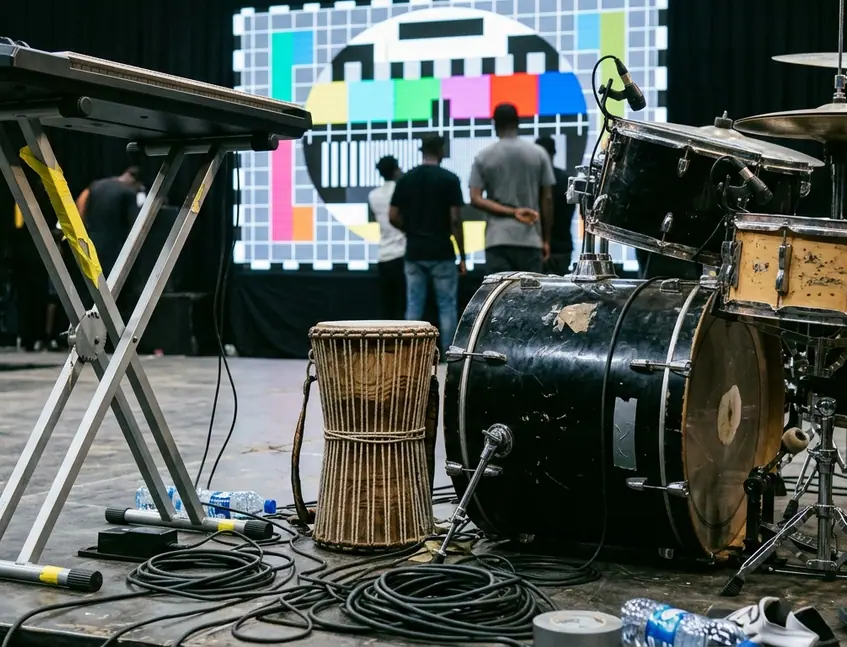
The strongest use case is not synthetic spectacle for its own sake. It is controlled world-building. A director can stage a desert memory, a Lagos nightscape, or a ceremonial abstraction without surrendering every variable to weather, permits, and traffic. Physical props still matter because Afrobeats visuals depend on touch: dust, cloth, sweat, metal, skin, and movement.
Archival culture in higher-resolution futures
AI tools may also help restore cultural memory. Teams are deploying localized upscaling tools to restore and integrate archival footage of traditional ceremonies into modern 8K timelines. That workflow can make older material usable inside contemporary videos without stripping away its historical texture.
Research and development phases for virtual production integration have spanned recent years. The timing matters because these systems require more than equipment purchases. Crews need new blocking habits, lighting discipline, post-production coordination, and ethical judgment around archival imagery.
Authenticity as a technical requirement
The future of Nigerian music cinematography will not hinge on whether directors can access bigger screens, sharper cameras, or more automated tools. It will hinge on whether those tools still serve Afrobeats’ cultural mechanics: dance as social code, fashion as identity, Lagos as pressure and possibility, tradition as living material rather than costume.
Technical innovation can attract global attention once. Cultural authenticity sustains it.
Expert Tip: The most durable Afrobeats visual strategy pairs one technical advance with one culturally specific decision in the same frame.
Nigerian music videos now operate as export cinema in miniature. They compress city, style, rhythm, memory, and ambition into three or four minutes. When the craft works, the viewer does not simply watch an artist perform a song. The viewer enters a cultural system already moving at global speed.