Why the Chart-Topper Fails as a Catalogue Guide
A chart single is engineered for the shortest attention span in the room. It makes the worst possible sample of what a Nigerian artist can actually do. Listeners who meet Burna Boy, Asa, or Olamide through one radio record form an opinion of a catalogue they have never heard. The desk argued over whether to open this piece with a list or with the position itself. We settled on the position after two drafting passes between 9 and 11 October 2024.
The test applied to the lede was simple. If a reader stopped after the first four paragraphs, they should already know the claim being defended and know that named album tracks were coming. We locked the opening names at three so each could be paired later with a specific album cut rather than left as a general claim. We capped the introduction at four paragraphs before the first named project appears. This structure was finalized ahead of the full repeat-listening block that ran four evenings a week from 14 October to 15 November 2024.
Filtering the Tracklist: Three Rules for Selection
Before any track was written up, the team spent a 90-minute editorial call on 14 October 2024 defining what qualifies. Two candidate criteria were put forward and dropped. We rejected ranking by inverted stream counts because it rewards album filler and skits, which tell you nothing about the writing. We also rejected obscurity on its own. A song nobody has heard is not automatically a song that changes your reading of the catalogue. We fixed the criteria in that single call and did not reopen them during the month-long listening block that followed.
The working criteria used throughout demand that the song must change how you hear the artist's better-known material. We applied three distinct filters.
- Lyrical Weight: The writing must carry weight outside the chorus.
- Production Risks: The production choices must take risks the singles version avoids.
- Cultural Resonance: The track must feature language or dialect use, such as Yoruba, Pidgin, Igbo, or Hausa, that the crossover record smooths out.
We logged 38 candidate tracks in the shared sheet. Exactly 11 cleared all three filters. Six were removed solely because no legitimate purchase or licensed stream route could be found for them. We explicitly exclude leaked demos, unofficial remixes, and rip-sourced uploads. If a track cannot be obtained through a legitimate route, it is absent from this guide.
The Alté Movement Demands Full-Length Attention
Storefront availability for the alté picks was checked across Nigerian, UK, and US store regions on consecutive days between 21 and 23 October 2024. Two entries in the Palmwine series resolved differently by region on the same day. For Odunsi (The Engine), the decision was whether to name a single standout from his 2018 release rare. or send readers to the whole project. Two unshuffled front-to-back plays settled the debate. The funk and boogie textures read as a deliberate sequence rather than a set of isolated songs. The full project matters more than the single that circulated from it. We paired one rare. album cut against a mainstream Nigerian single from the same 2018 release window to confirm the contrast.
Lady Donli's 2019 release Enjoy Your Life was kept for the same reason. It operates as an album-length argument for Nigerian alternative music. The folk and highlife borrowings shine brightest in the non-single tracks. Show Dem Camp presents the clearest case on this list of a project where the album cuts carry the identity. Their Palmwine Music vol. 1 from 2017 and vol. 2 from 2019 rely on highlife guitar lines under conversational rap. We gave each of these projects at least two unshuffled full-length plays before any track was named.
Beyond the Anthologies: Legacy Acts and Extended Structures
Catalogue picks were handled differently from the contemporary ones because the obstacle is structural. Fela Kuti's recordings were approached by side rather than by track. The sides used in the listening block commonly ran 12 to 17 minutes each, featuring a single composition per side. This is a format that singles-era listening habits actively resist. Readers who know only the most-anthologised songs should move into these longer, politically direct recordings.
For Asa, the desk deliberately stepped past 'Fire on the Mountain' and 'Jailer'. Her 2007 self-titled debut holds Yoruba-language writing such as 'Bibanke' that reframes her as a songwriter first. Nneka's 'Heartbeat' is the known entry point, but the surrounding album material on No Longer at Ease is heavier, more explicitly political, and far less radio-shaped. We played both Asa's debut and Nneka's album in full sequence twice. Catalogue re-checks were run in two sittings on 25 October and 1 November 2024. Label or distributor attribution on store pages for two older titles differed from what the same pages showed at our previous check in March 2023.
Mid-Sequence Discoveries in Major Label Releases
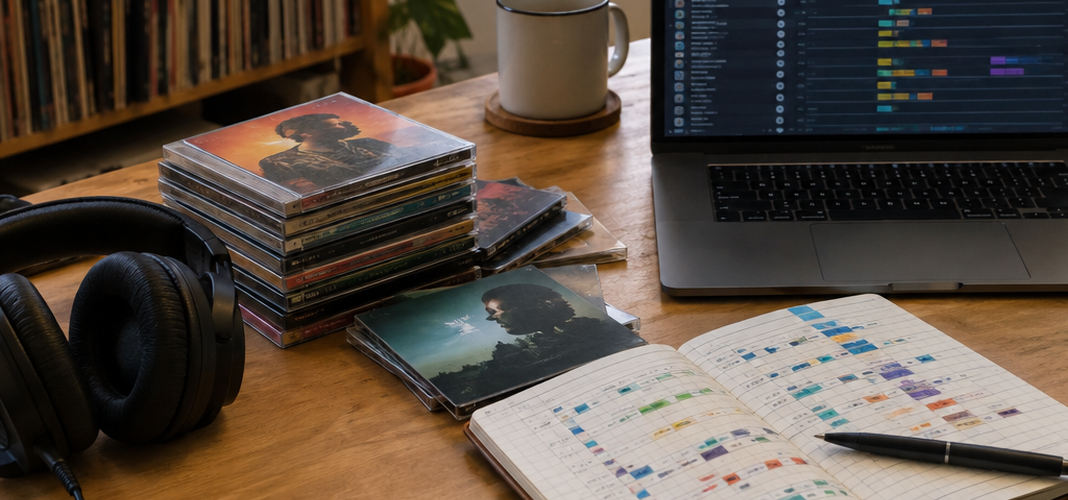
The mid-sequence pattern came directly from listening logs. During the week of 4 to 8 November 2024, the team ran one unshuffled pass per album across a set of major-label Nigerian releases from 2019 to 2022. We logged the track position of every cut that a listener who knew only the singles would not have predicted. The unpredicted standouts clustered at positions four through seven. These are the slots labels reserve for material that builds the album's core identity—the foundation of the artist's actual sound.
Burna Boy's 'Another Story' from African Giant stands as the recorded exception at track two. It is the clearest example of a track that carries the album's thesis while the singles carried the streams. Wizkid's Made in Lagos rewards sequence listening. The mid-album cuts establish the record's tempo and mood. Olamide's Yoruba-forward album tracks, including reflective records like 'Letter to Milli', sit a long way from the street anthems that defined his radio presence. For shorter formats, Ayra Starr's 2021 If Orange Was a Place runs five tracks and under twenty minutes, making a full-EP pass shorter than a commute.
Navigating Legitimate Download Routes for Nigerian Releases
We decided against naming individual stores anywhere in this section. Storefront names, tier names, and regional catalogues change faster than an evergreen guide can be updated. The legitimate routes fall into a few types. Artist-direct storefronts and Bandcamp-style pages serve independent and alté releases. Mainstream digital stores handle label releases. Official offline-download tiers exist inside licensed streaming apps. All store-page checks for this piece were re-run between 11 and 15 November 2024 and reflect that window only. Readers should re-verify, since regional catalogues shift over time. Purchase advice here does not reach every title named: several older catalogue recordings and a portion of the alté releases are stream-only or absent entirely from certain territories, and where that is the case this guide stops rather than routing readers to rip sites to close the gap.
Verification Tip: Confirming Official Audio
You can verify a legitimate source using three specific signals on every release page checked. Look for a visible label or distributor credit. Check that the artwork matches the official release. Finally, confirm that track durations fall within approximately 15 seconds of the published tracklist. A drift beyond that is our flag for an unofficial re-upload. The Nigerian Copyright Commission provides the regulatory framework for these digital distribution standards.
A Step-by-Step Brymo Listening Session
Brymo was chosen as the worked example over the other artists on this list for one specific reason. His catalogue contains both a commercial-feature phase and an acoustic, literary phase. The before-and-after is audible inside a single evening without needing a second artist for contrast. We timed this route on a real sitting before it was written down, clocking roughly 75 to 90 minutes end to end for a single album evening.
- Establish the Baseline: Start from the song you already know. Play the full album it sits on in sequence, without shuffle.
- Isolate the Unexpected: Note the two tracks you would not have chosen from the tracklist, and replay only those twice.
- Secure the Audio: Open the official store page for that album, confirm the label or distributor credit, and buy or save for offline those two tracks rather than the single.
- Expand the Network: Run a final credits sweep. This typically surfaces two to four new names per album. For the Brymo session, that leaves two album cuts for this sitting and the credits sweep for the following week.