Introduction: Meeting Zinoleesky
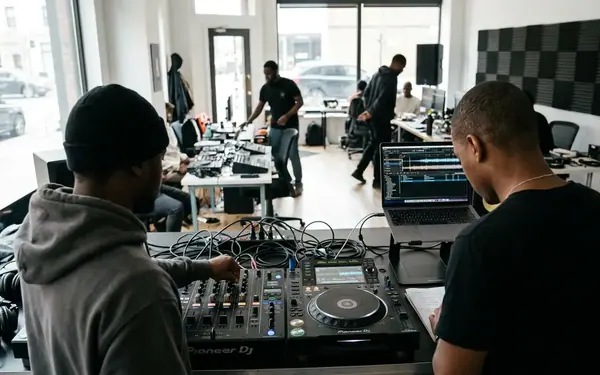
Zinoleesky enters the contemporary Afrobeats argument from a precise geography: Agege, Lagos, where informal studios, freestyle circles, and phone-to-phone circulation can function as a parallel academy.
Born Oniyangi Oniru Temikotan in 1999, he carries the mainland pressure in his phrasing. The voice is tuneful, but never polished into blandness. The slang does not decorate the song; it drives the hook, bends the rhythm, and marks the listener who understands the code beneath the melody.
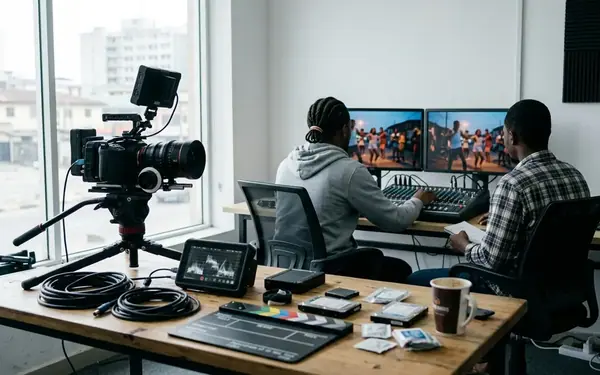
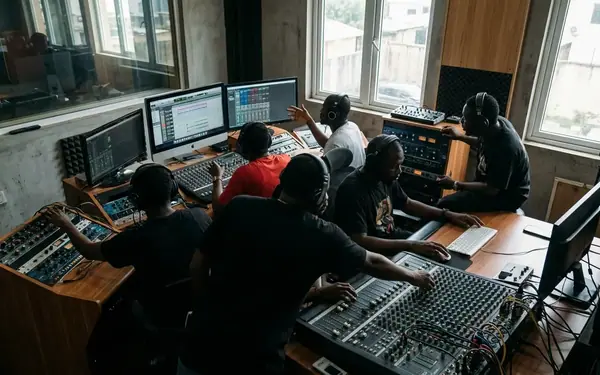
Our interview sat inside a promotional window that ran from mid-2022 into early 2023. The editorial choice mattered. We chose an in-person studio session, roughly 90 minutes long, because written answers flatten the timing, hesitation, and small corrections that reveal how an artist understands his own rise.
In this Article
- How Agege shaped Zinoleesky before formal label machinery entered the story.
- What the Marlian Music affiliation changed, and what it did not prove by itself.
- Why his melody, cadence, and lamba place him slightly aside from mainstream Afrobeats peers.
- Where his influence is visible, and where the catalogue still needs fuller architecture.
- How he defines ambition beyond streaming peaks.
His trajectory matters because it shows a street-pop route into Afrobeats at the moment the genre has become global shorthand for Nigerian cultural power. It also demands precision. His path represents a Marlian-adjacent street-pop wave; it should not stand in for artists built through formal A& R pipelines or diaspora-first entry points.
Main Point: Zinoleesky is not compelling because he escaped the street-pop system. He is compelling because he learned how to make that system audible inside a global-facing Afrobeats frame.
From Agege Streets to Viral Recognition
Early foundations before the contract
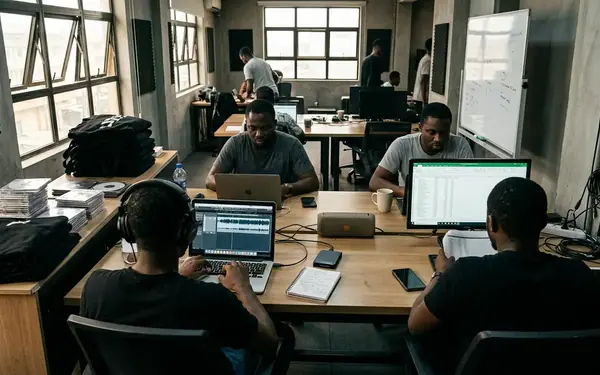
Agege gave Zinoleesky a demanding kind of training. Not conservatory training. Not label camp training. Training by correction, replay, ridicule, and quick approval from people standing close enough to interrupt the take.
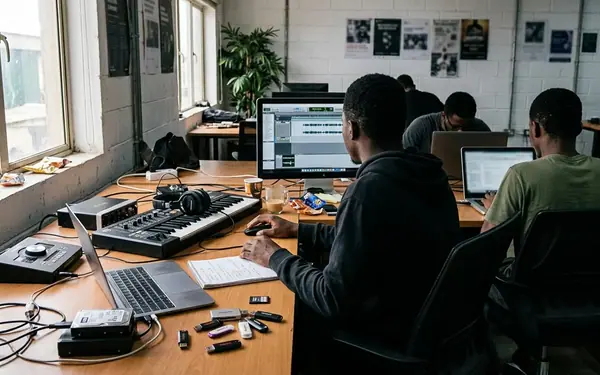
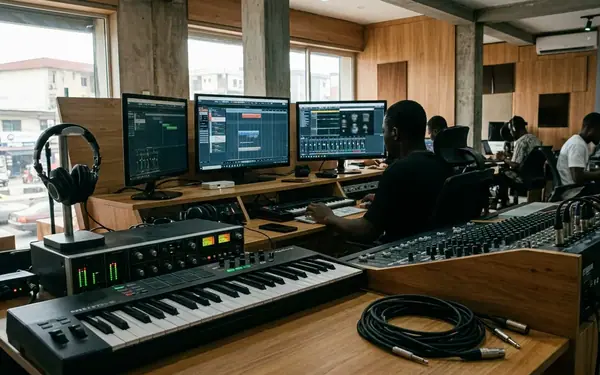
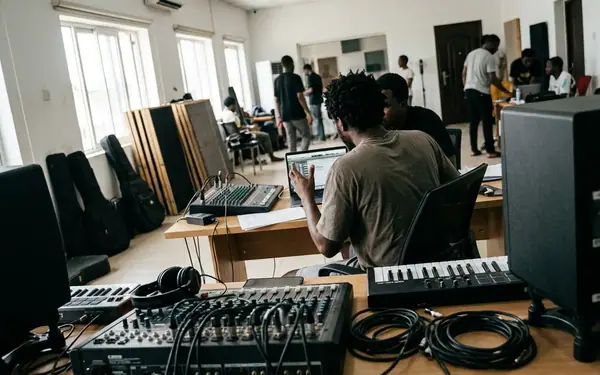
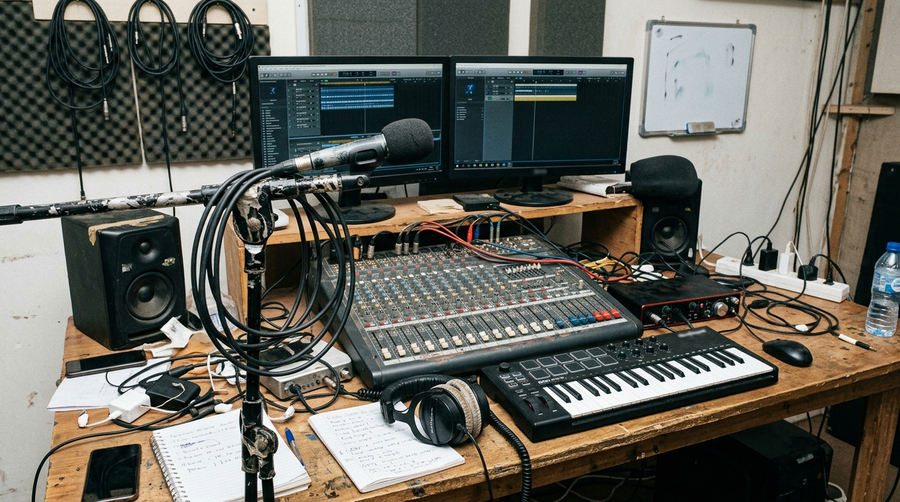
Before formal signing, he cut early reference tracks in low-budget mainland studios where session fees ran by the hour rather than by the song. That billing structure changes an artist’s method. You do not wander through ten versions of a line when the clock keeps eating the budget. You arrive with fragments, test them fast, and learn which phrases survive pressure.
From roughly 2017 to 2019, his local visibility grew through freestyle clips, neighborhood listening, and phone-to-phone sharing before broader streaming traction arrived. The point is not nostalgia for scarcity. The point is mechanical: dense peer networks accelerate taste formation. An artist with identical talent but no access to a dense freestyle network like Agege’s would likely refine slower, lacking the constant live peer feedback that shaped his early output.
Q& A: Low-budget rooms and freestyle culture
Q: When you remember those first sessions, what do you hear first?
A: He returns to the urgency of the room: little money, limited time, people waiting, beats moving quickly, and the pressure to make the hook land before attention moved elsewhere. The studio was not a sanctuary. It was a testing ground.
Q: Did the freestyle clips feel like strategy at the time?
A: He describes them less as strategy than as routine. The clips moved because people carried them. Someone played a fragment for a friend; a friend replayed the hook; the hook became a local credential before it became platform content.
This is where the usual rags-to-recognition storyline becomes too neat. His early years were not only about deprivation or luck. They were about repetition inside a specific cultural circuit: street feedback, cheap studio hours, slang fluency, and melodic instinct sharpened under local scrutiny.
Signing to Marlian Music: The Naira Marley Influence
How the deal materialised
The shorthand says Zinoleesky was discovered and signed. The fuller story separates introduction, attention, and contractual affiliation.
He joined the Marlian Music roster during the label’s 2019 to 2020 expansion phase, when multiple street-pop acts entered its orbit. That timing matters because the label was not merely adding voices; it was consolidating a public style. Street language, youth defiance, internet virality, and Lagos mainland credibility all sat inside the Marlian brand’s public grammar.
Q& A: Mentorship and creative freedom
Q: What changed first after the affiliation?
A: Visibility changed before the inner process did. The label connection widened the room around him, but his account of mentorship leans informal: studio guidance, proximity, listening, and adjustment rather than scheduled lessons or rigid creative supervision.
Q: Did the Marlian identity restrict the music?
A: He frames it as a public frame more than a cage. The affiliation gave audiences a way to read him quickly: street-pop, youthful edge, and a certain Lagos-coded irreverence. Yet the songs still had to carry his own melodic signature; brand recognition could introduce him, but it could not sing the chorus.
Caution: Label affiliation accelerated his visibility but does not substitute for independent chart certification, so commercial standing must be judged separately from roster prestige.
That distinction protects the analysis from promotional blur. Roster membership tells us about positioning, network, and release context. It does not, by itself, settle the question of catalogue weight or commercial verification.
A Distinct Sonic Identity: Melody, Cadence, and Lamba
Where his sound sits among Afrobeats peers
Zinoleesky’s strongest material leans into melodic Afro-fusion phrasing without abandoning street-pop friction. Compared with smoother mainstream Afrobeats peers, his delivery often keeps a grain of conversational roughness. He can sing through a line, then clip the ending like someone speaking across a crowded Lagos street.
The technical core sits in three layers: melody, cadence, and lamba. Melody makes the line travel. Cadence gives it bounce and bite. Lamba, the local wordplay and comic-sly verbal charge, gives the phrase its social life among listeners who know the linguistic game.
Q& A: Writing across Yoruba, Pidgin, and English
Q: Do you begin with melody or words?
A: He describes a process where melodic contour and street phrase chase each other. A line may start as a hummed shape, but it becomes his only when Yoruba, Pidgin, and English begin to switch within the verse without sounding translated.
Q: Why keep the code-switching so dense?
A: Because the density is part of the music’s truth. If a phrase would sound sharper in Yoruba, it stays there. If Pidgin carries the comic snap, it takes the line. English enters when it opens the hook or widens the address.
His signature tracks from the 2020 to 2022 stretch gained heavy short-form-video reuse, especially where hook fragments under half a minute carried the circulation. That format rewarded compact melodic ideas. A line that feels complete in half a minute can travel farther than a more elaborate verse that needs narrative patience.
There is a limit inside that strength. His short-form-video-driven hook circulation works for melodic fragments under half a minute but does not translate to longer narrative tracks, where the same distribution mechanic offers little lift.
Reception and the local ear
The reception gap tells us something useful. Audiences fluent in Yoruba and Pidgin layering often rate the lamba as highly as the melody. Non-Nigerian listeners may catch the sweetness and miss the joke, the double edge, or the streetwise compression that makes the hook feel inevitable at home.
Peer feedback suggests that this is not a defect in the songwriting. It is a trade-off. He writes from a dense linguistic center, then lets the melody carry what translation cannot.
Redefining Afrobeats: Influence and Limitations
Globalisation without flattening
He pushes against the grand claim before accepting any praise. Redefining Afrobeats is a large phrase, and he treats it cautiously. His view of globalisation begins with the diaspora listener, especially Nigerian clusters in the UK and North America where streaming pickup grew notably across the 2021 to 2023 window.
That diaspora audience does not hear him as an exotic export. It hears him as memory, slang, Lagos tempo, and youth language compressed into replayable hooks. The song becomes a portable mainland signal.
Q& A: Diaspora ears and local accountability
Q: When the songs move outside Nigeria, do you adjust the writing?
A: He does not describe adjustment as dilution. The aim, as he frames it, is to keep the local charge intact while allowing melody to open the door for listeners who may not catch every coded phrase.
Q: Do younger Lagos artists now borrow from your cadence?
A: He acknowledges the echo but avoids overstating ownership. Cadence imitation circulates quickly in Lagos. One artist bends a phrase; another absorbs it; a third makes it sound like common property by the next weekend.
This is the hardest part of influence to measure. His impact on younger Lagos artists is easier to hear than to verify. Imitation of cadence often travels without attribution, so claims of direct lineage rest more on peer testimony than hard tracking data. For this kind of street-pop formation, the evidence travels unevenly across scenes.
The catalogue question
His self-assessment lands on a useful weakness: project-length cohesion trails his singles strength. Across his active years, full bodies of work remain fewer than his loose-single output. The result is a catalogue with bright points of identity but still developing long-form architecture.
That does not diminish the singles. It places them correctly. Zinoleesky has proven how sharply he can seize a hook, condense slang into melody, and make a short fragment circulate. The next test is whether that instinct can hold across longer arcs without losing the volatility that made the songs move in the first place.
What Comes Next: Vision and Ambitions
Plans for releases, collaborations, and touring
The final part of the conversation reversed the usual order. Before listing plans, he defined success. That choice matters because ambition without a yardstick turns every upcoming release into empty hype.
His stated plans target the next release cycle across late 2023 into 2024, with collaborations and international touring intentions in view. Those plans sit inside real constraints. Visa processes and promoter logistics have stalled comparable Nigerian acts, so touring talk should read as intent rather than confirmed dates.
Q& A: Success beyond streaming numbers
Q: What would make the next phase feel successful?
A: He defines the answer around catalogue longevity and ownership rather than peak chart placement. In practical terms, that means songs that remain useful to listeners after the promotional cycle closes, and rights structures that let the artist benefit from the life of the work.
Q: Where does legacy sit in that definition?
A: Legacy, in his framing, is not a statue word. It is whether the music keeps speaking for the environment that formed it, and whether younger artists can hear both freedom and discipline in the path he took.
Expert Tip: To read Zinoleesky well, separate three measures: the hook’s viral mobility, the song’s local linguistic force, and the catalogue’s long-term structure. They overlap, but they are not the same test.
Zinoleesky’s promise sits in that separation. He already knows how to make a chorus feel like a street corner has entered the studio. He knows how to let Yoruba, Pidgin, and English jostle without apology. He knows the difference between attention and endurance, even if the catalogue still has work to do.
The Marlian star is not redefining Afrobeats by leaving Lagos behind. He is doing it by insisting that Agege can remain audible as the sound travels.