From BBM Broadcasts to the Channel Tab
A Nigerian DJ mix often reaches its listener as a file in a chat thread. That route has a history. BlackBerry Messenger broadcast lists moved links to shared.zip folders before the download blog became the circuit’s public address. A friend forwarded the folder; another passed it into a different conversation. The mix travelled through people who already knew which DJ to trust.
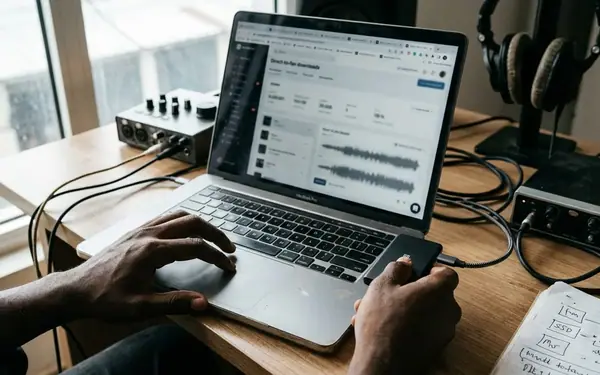
Download blogs gave that traffic a record. DJs placed files on hosts, sent artwork and tracklists to bloggers, and depended on a homepage slot and a “click here to download” link for reach. A reader who missed the first wave could still find the post later. Comments supplied a rough public response, while searchable pages made older mixes part of the scene’s memory.
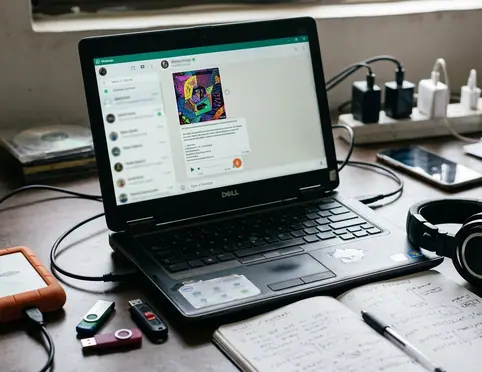
WhatsApp Channels brought the broadcast back inside the messaging app, this time as an admin-led feed with followers rather than a crowded promo group. WhatsApp's official documentation on Channels explains the format. For DJs, the change is practical: cover art, tracklist and audio can arrive in the same place where listeners already receive forwarded mixes. The blog remains useful, though its job has shifted from breaking a drop to preserving one.
How a Mixtape Drop Lands in a Channel
Open a typical drop and the sequence is deliberate. The cover appears first because its thumbnail survives a forward into a group chat or status. A separate text post carries the tracklist, which a listener can pass along without sending the audio. The file follows, either attached directly or placed behind a host link. Later, the DJ may repost it for followers who missed the initial update.
The file decision comes first
Before any artwork goes up, the DJ has a quality and delivery choice. An 80-minute mix works out to roughly 183 MB at 320 kbps, about 110 MB at 192 kbps, or near 73 MB at 128 kbps. Splitting the set into two shorter parts offers another route for listeners on weak connections. These are bitrate calculations, not evidence that every Channel imposes the same practical limit: listeners’ data costs and patience can matter more than an upload ceiling.
That choice changes the listening experience. Heavy compression can flatten a crowded club mix; separate parts interrupt its pacing. Blogs could also host compressed files, but a Channel drop puts the download decision beside an immediate forward button. Reactions and polls give the DJ a quick temperature check. They do little to explain why a transition worked, or where somebody stopped listening, as a detailed comment sometimes could.
A DJ’s Followers Can Outlast a Blog Homepage
A blog could send a DJ substantial traffic while retaining control of the route to it. If the site went dark or changed hands, a homepage placement and its associated audience disappeared with it. A Channel lets the DJ keep a direct follower line for the next mix, a club announcement or a fresh link to an older set.
That advantage has a boundary: people have to find the Channel first. A blog post can answer a search for a tracklist or an artist featured in the mix. Channel growth leans on forwarded updates, a link in an Instagram or X profile, and the QR card beside a DJ booth. A street-pop set might pass rapidly through local group chats while leaving no searchable page for someone who hears about it later.
The audience is closer to the DJ, but its wider movement is hard to see. Once a forwarded update enters chats and statuses, the Channel’s view count no longer describes every person it reaches. Claims about a mix circulating across a city should be treated as observations of those forward chains, not as reach figures produced by a dashboard.
What Channel Counts Tell a Promoter
A DJ can read follower totals, post views and reaction tallies. Those numbers help compare the immediate response to two drops. They offer thinner evidence when an event promoter asks where potential ticket buyers live or when a label wants to know how many people took the complete file.
The missing trail
A blog and its file host may provide a referrer, location breakdown, device information or a completed-download event, depending on the tools in use. A Channel view supplies none of those answers by itself. A person may open the cover, react to the tracklist and never save the audio. Another may receive the file through a forwarded chat without appearing in the DJ’s Channel figures.
Some DJs place native audio alongside a trackable host link, using the link’s report when pitching a placement. The arrangement introduces a trade-off: it measures activity on that particular link, while leaving native downloads and forwards outside the count. These observations describe practices on the download circuit, not a systematic audit of Nigerian DJ Channels. For a commercial pitch, the cleanest claim is the narrow one the available numbers can support.
Uncleared Tracks Still Have Public Exposure
Nigerian mixtapes often weave together full tracks, edits and blends without a separate clearance for each use. On a blog, the tracklist and file-host URL expose the mix to search and rights monitoring. A rights holder can identify a recording from an indexed post, then direct a complaint toward the site or host.
A Channel update is less visible to open-web search, especially when the audio arrives natively and the tracklist stays inside the feed. That reduced visibility can delay discovery of an uncleared use. It does not resolve the underlying rights question.
Enforcement can reach an in-app update through a report, a file through its external host, or the DJ through a related public upload and profile. A clip that resurfaces on a searchable platform can also draw attention back to the original mix. DJs planning a long-lived archive should think through credits and permissions before a tracklist becomes a permanent public page, rather than assuming a quiet launch settles the issue.
Check the File Before You Tap Download
A listener can make one useful check before opening a supposed mix: compare its size with its runtime and file type. A genuine 60-minute MP3 works out to roughly 55 MB at 128 kbps or 138 MB at 320 kbps. A “full mix” arriving as a tiny installable app demands a different explanation. Delete it unopened, particularly if the link asks for an APK or an installation step.
Cloned Channels make this harder than a suspicious filename alone. An impostor can copy a DJ’s display name, cover art and cover-first posting rhythm, then send followers through shortened links and ad gateways. The artwork may look familiar because it was copied from a real drop.
- Open the DJ’s verified Instagram or X profile yourself and compare its Channel invite link with the forwarded link, character by character.
- Where the real Channel offers native audio and a shortener for the same mix, choose the direct audio post.
- Check that the downloaded file is audio of a plausible size for its advertised runtime. Reject any request to install an app to hear it.
That short routine protects the next download without requiring a listener to recognize every scam currently circulating.
Blogs Keep the Tracklist; Channels Carry the Premiere
The two surfaces answer different questions. A Channel answers, “What has this DJ dropped tonight?” It delivers an update to existing followers and gives them a simple route to forward it. A blog answers, “What was in that mix I heard months ago?” Its permanent URL, indexable tracklist, artwork and credits help a listener recover the set and identify the artists in it.
The release pattern that uses both is straightforward. Premiere the audio in the Channel, then publish an archival post with the full credited tracklist and a stable download location after the opening burst. A blog that receives the mix later still contributes something specific: a durable public record and a referral trail. A Channel-only release may win the first conversation and vanish from search when that conversation ends.
This also changes what a blogger can offer a DJ. Homepage speed matters less when followers already have the file. Careful credits, reliable links and an archive that remains readable give the mix a second life as music news and as a source for future features.
Put the Drop in the Feed and the Record on the Web
Use the WhatsApp Channel as the front door and a publicly indexed post as the home of every mix. The DJ gets a direct launch-night audience, while the archived tracklist gives artists their credits and helps promoters or new listeners find the set later. Blog operators should build that lasting record instead of trying to beat a forwarded file to the first click. Listeners should join through a link checked against the DJ’s own profile and keep the audio they choose to download locally.
Broadcast the premiere in the Channel; publish the credited archive every time.